
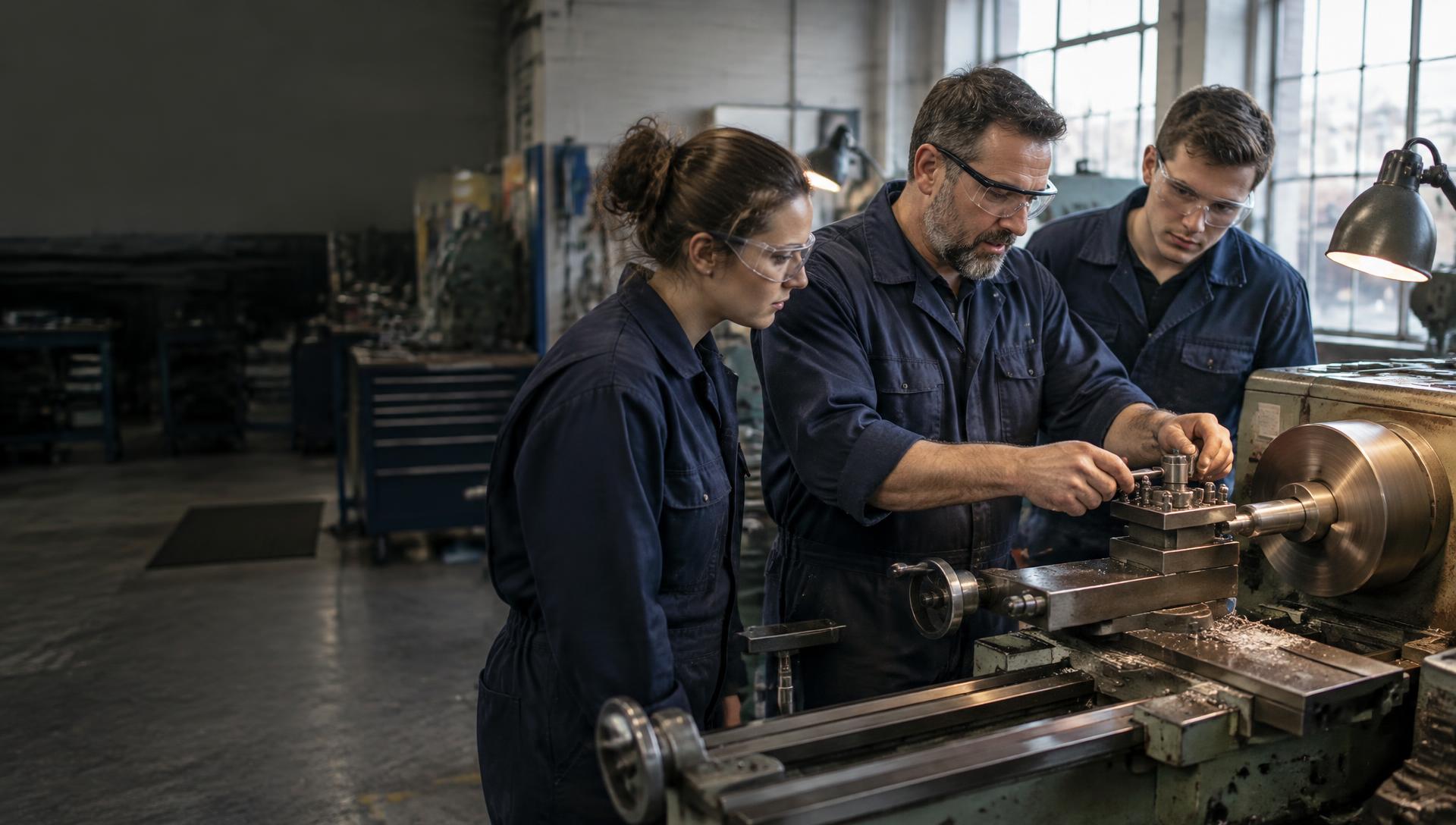
What engineering covers in further education
In FE, engineering usually spans mechanical, electrical and electronic engineering, manufacturing and machining, fabrication and welding, maintenance, mechatronics and automation, plus specialist provision linked to local employers in aerospace, rail, marine, energy and process industries.
Roles you could be considered for
- Engineering lecturer
- Workshop instructor or technician demonstrator
- Apprenticeship assessor or skills coach
- Curriculum or programme lead (with experience)
- End-point assessment preparation tutor
What you might teach
- Bench fitting and hand skills
- Turning, milling and CNC programming
- Engineering drawing, CAD and tolerancing
- Electrical and electronic principles
- Maintenance practice and fault finding
- Health and safety in engineering workshops
Skills from industry that transfer into teaching
- Working safely to standards and procedures, then explaining why they exist
- Breaking a complex job into stages an apprentice can follow
- Inspecting work against specification and giving clear feedback
- Mentoring apprentices or new starters on the shop floor
Routes into FE teaching and qualifications
Many engineering lecturers join colleges with industry qualifications and experience and complete a teaching qualification once employed. Colleges often look for a relevant Level 3 or higher qualification and substantial recent experience, but requirements vary by college, role and nation.
How requirements differ across the UK
- England: there is no single legal teaching qualification requirement for FE, but many colleges expect staff to hold or work towards one.
- Wales: FE teachers must register with the Education Workforce Council.
- Scotland: the TQFE is the established qualification for college lecturers. Registration arrangements are changing, so check current guidance.
- Northern Ireland: colleges commonly expect lecturers to gain a recognised teaching qualification within a set period.
See our guides for England, Scotland, Wales and Northern Ireland, and teaching qualifications and teaching without a teaching qualification for more detail.
Funding information
Support for teacher training, such as bursaries or employer-funded qualifications, changes over time and differs by nation. We only publish funding details that we have checked against official sources. See our funding information hub.
Common questions
Do I need a degree to teach engineering in a college?
Not usually. Many college roles ask for a Level 3 qualification or higher in the subject plus significant industry experience. Some higher-level courses may need a higher qualification. Each college sets its own requirements.
Can I teach part-time while still working in industry?
Some colleges recruit sessional or part-time staff, particularly for specialist skills. Availability depends on the college's timetable and needs.
Which engineering specialisms are in demand?
Demand changes by area and college. We hear regularly about machining and CNC, electrical and electronic, maintenance and mechatronics, but we will only describe a specific vacancy when one is open.
Engineering specialisms
- Machining and CNC
- Fabrication and welding
- Electrical and electronic engineering
- Mechanical engineering
- Maintenance and reliability
- Automation and mechatronics
- Machine tools
- Manufacturing and production
- Quality and metrology
- CAD/CAM and design
- Aerospace engineering
- Rail engineering
- Marine engineering
- Renewable energy engineering
- Process and chemical engineering