
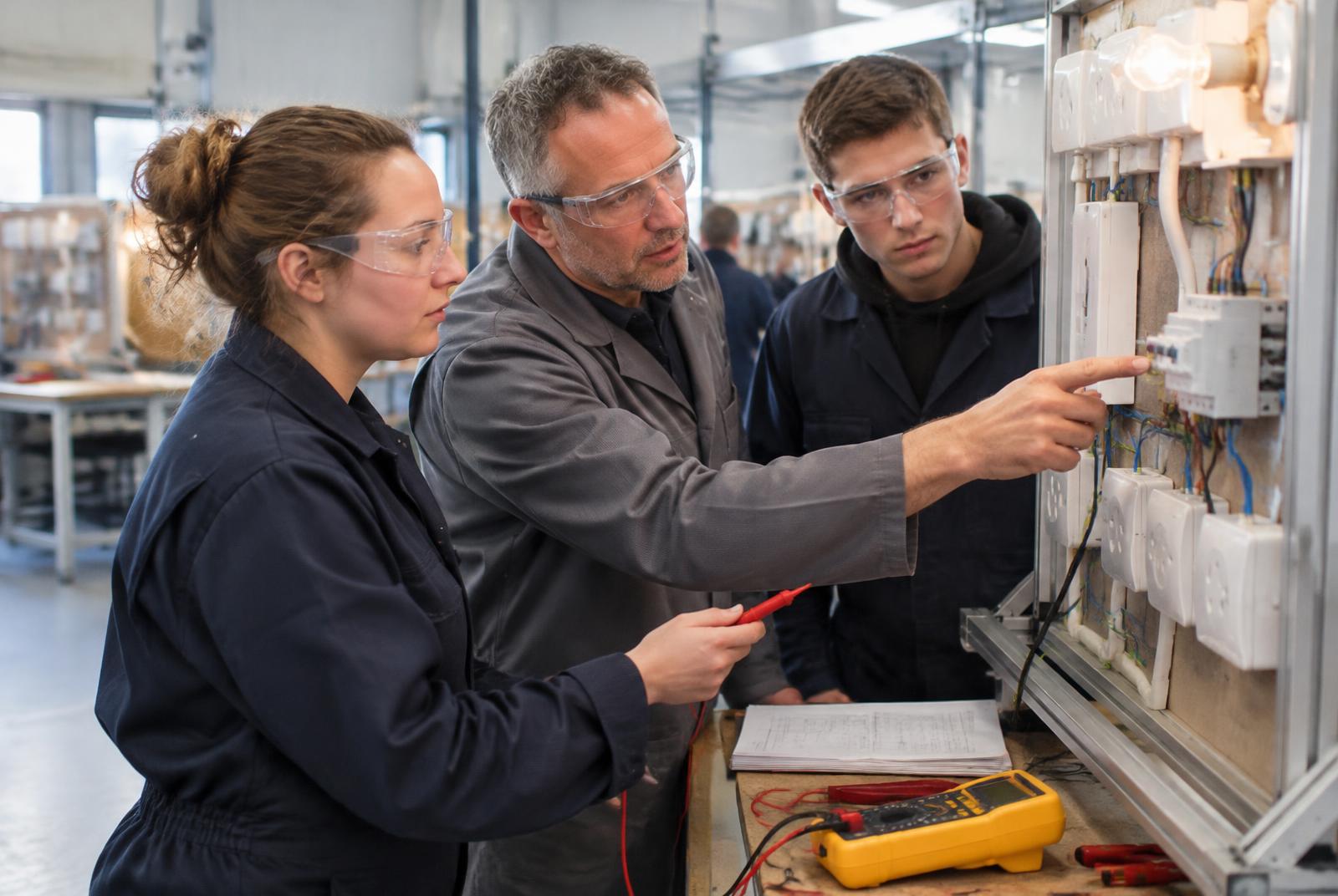
What electrical installation covers in further education
Domestic, commercial and industrial installation, inspection and testing, wiring regulations, and renewable technologies.
Roles you could be considered for
- Electrical installation lecturer
- Workshop instructor
- Apprenticeship assessor
What you might teach
- Installation methods
- Wiring regulations
- Inspection, testing and certification
- Safe isolation
Skills from industry that transfer into teaching
- Working to regulations
- Certifying your own work
- Supervising apprentices
Routes into FE teaching and qualifications
Colleges usually expect a Level 3 electrical qualification and current knowledge of wiring regulations.
How requirements differ across the UK
- England: there is no single legal teaching qualification requirement for FE, but many colleges expect staff to hold or work towards one.
- Wales: FE teachers must register with the Education Workforce Council.
- Scotland: the TQFE is the established qualification for college lecturers. Registration arrangements are changing, so check current guidance.
- Northern Ireland: colleges commonly expect lecturers to gain a recognised teaching qualification within a set period.
See our guides for England, Scotland, Wales and Northern Ireland, and teaching qualifications and teaching without a teaching qualification for more detail.
Not everyone with experience in this sector will be suitable for every teaching role. Opportunities depend on your experience, the subject requirements, each college's criteria and your circumstances.
Funding information
Support for teacher training, such as bursaries or employer-funded qualifications, changes over time and differs by nation. We only publish funding details that we have checked against official sources. See our funding information hub.
Common questions
Do I need an inspection and testing qualification?
It is often expected for teaching inspection and testing units.