

Real Skills. Brighter Futures.
For experienced tradespeople and technicians
You have mastered your trade. Now teach it.
01 / Why you
A textbook cannot teach what you already know.
Learners do best when they are taught by people who have done the job, and colleges know it. Your industry experience is the scarce thing, not a teaching certificate.
- Learners trust people who have done the job
- Your site experience makes the standard real. It is the one thing a textbook cannot supply.
- Colleges struggle to recruit trade experts
- Construction and building services departments often compete with industry for the same people.
- You do not start from zero
- Training apprentices, checking work and planning jobs are already teaching skills.

02 / The honest picture
Teaching is not for everyone. For the right person it is a great move.
What you could gain
Regular, employed work with a timetable. Part-time, sessional, fixed-term and permanent roles all exist. FE teaching can offer access to teachers’ pension schemes, not just a standard workplace pension, and paid annual leave, often with generous allowances. Check each job pack for the scheme, contribution rates and leave entitlement.
What to expect
Teaching is demanding. Planning, marking and assessment sit alongside time with learners, and timetables follow the academic year rather than site hours. Pay is set by each college, so we only quote figures an employer has advertised. Many colleges expect a teaching qualification to be gained after you start.
03 / Your trade
Find your trade. See where it could take you.
Choose your trade to see what you could teach, the roles to look for and the experience colleges value.
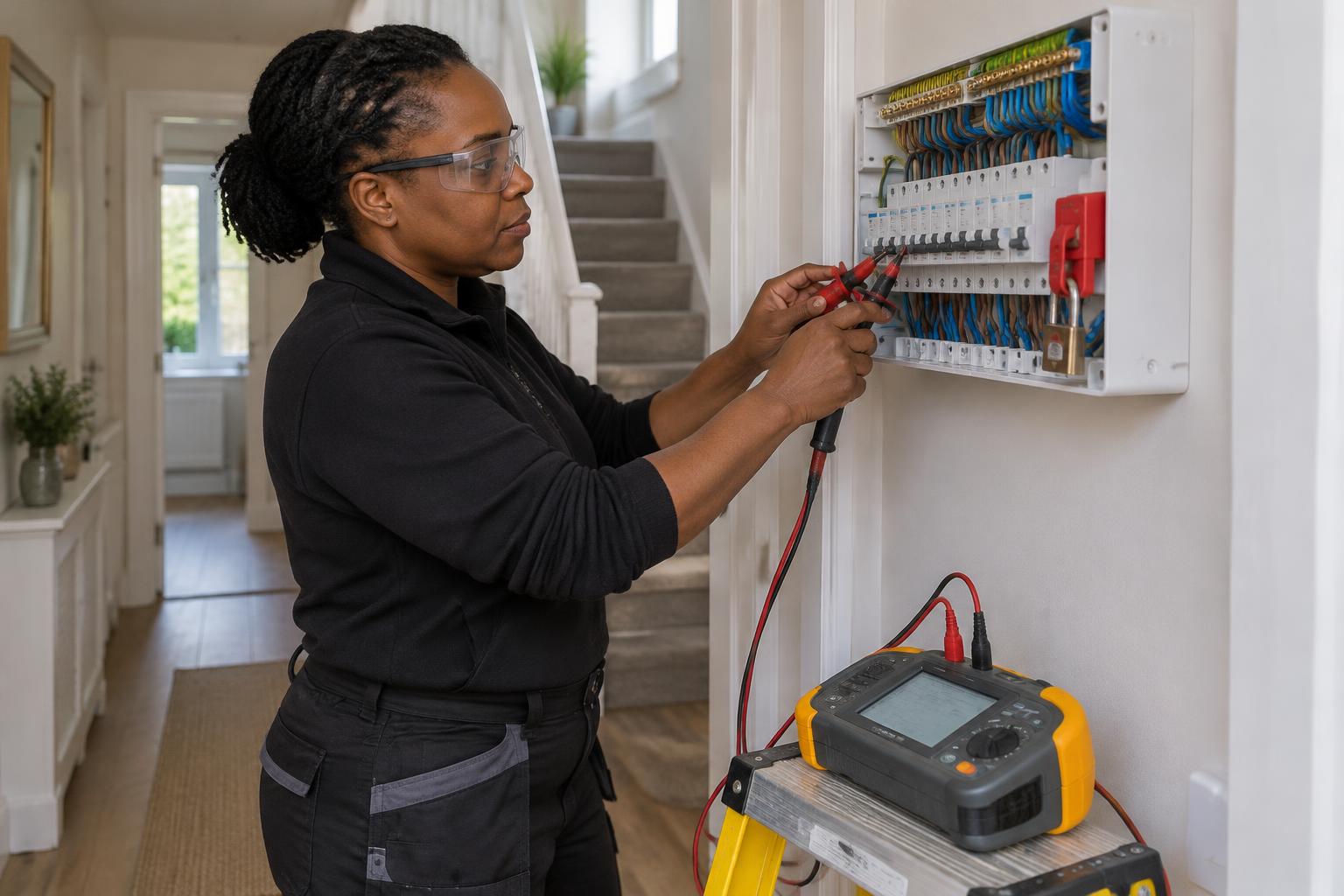
Teaching electrical installation
Electrical installation is one of the largest trade areas in FE. Colleges need qualified electricians who can teach safe practice and the current wiring regulations.
What you could teach
- Installation methods
- Wiring regulations
- Inspection, testing and certification
- Safe isolation
Roles to look for
- Electrical installation lecturer
- Workshop instructor
- Apprenticeship assessor
Experience colleges value
Working to regulations. Certifying your own work. Supervising apprentices.
Qualifications: Colleges usually expect a Level 3 electrical qualification and current knowledge of the wiring regulations.
No listing names this trade right now. See what is listed or register and we will tell you when something suits.
04 / Ways in
Teaching is not one job. It is five.
Some roles are mostly practical workshop teaching. Others include theory, assessment or visiting apprentices at work. What you need depends on the college and the role.
How to become a trade teacher
- 01
FE lecturer
Theory and practical sessions with college learners, from entry level to Level 3 and beyond.
- 02
Workshop instructor
Hands-on teaching in a college workshop, demonstrating the skill and coaching learners as they practise it.
- 03
Apprenticeship assessor
Checking apprentices' work against the standard, often on site and often alongside your own work.
- 04
Skills coach
Supporting apprentices and employers through an apprenticeship programme.
- 05
Part-time or sessional trainer
Paid by the hour for set sessions, which can fit around other work.
05 / Pay and employment
What about the money, the pension and the holidays?
06 / Opportunities
See what is out there.
Each item is labelled. A confirmed vacancy is a role a college or employer has asked us to fill. A talent pool or regional expression of interest is not a live job.
No confirmed college vacancies are listed right now.
Candidates often register before a role is advertised. When a college asks us to recruit in your trade and area, registered candidates are the first people we speak to.
Free. Not a job guarantee.
07 / How it works
Four simple steps. You stay in control.
- STEP 01
Register your interest
One short form, around four minutes. No account and no CV needed.
- STEP 02
Talk it through
A recruiter calls, usually within two working days, to hear about your trade and what you want.
- STEP 03
We look for a fit
We look for roles and colleges within reach that suit your experience and availability.
- STEP 04
You decide
With your permission we introduce you to colleges. Registering does not guarantee an interview or a job.

08 / Who we are
A specialist recruiter, not a job board.
Trade2Teach is a UK recruitment business with one focus: helping people with real trade and technical experience move into further education. We speak to every candidate, explain teaching honestly, and only introduce you to a college with your permission.
- Candidates never pay. Colleges pay a placement fee when they appoint someone we introduced.
- We do not publish invented testimonials, statistics or partner logos.
- Trade2Teach Ltd, company number 17438407.
Does Trade2Teach charge candidates?
No. Colleges pay us when they appoint someone we introduced.
Do I need teaching experience?
No. Experience such as training apprentices helps, but it is not essential.
Will my employer find out?
We never contact your employer, and we only share your profile with colleges you agree to.
Do I have to leave my job to register?
No. Registering is free, does not commit you to anything and does not involve your employer. Some colleges offer part-time or sessional teaching that can fit around other work, though not every college does.
What if teaching pays less than my trade?
It may, or it may be about the same once costs, unpaid time and your own pension are counted. Pay is set by each college, so we only quote figures an employer has advertised. Our salary guide explains how to compare like with like before you decide.
Am I too old to move into teaching?
Colleges recruit for current industry experience, so years in the trade count in your favour, and UK equality law protects job applicants from age discrimination. Teaching is demanding in its own ways, and every appointment is the college's decision.
Recruiting for a college?We help FE colleges find experienced construction and technical professionals.Recruit through Trade2Teach
For tradespeople