
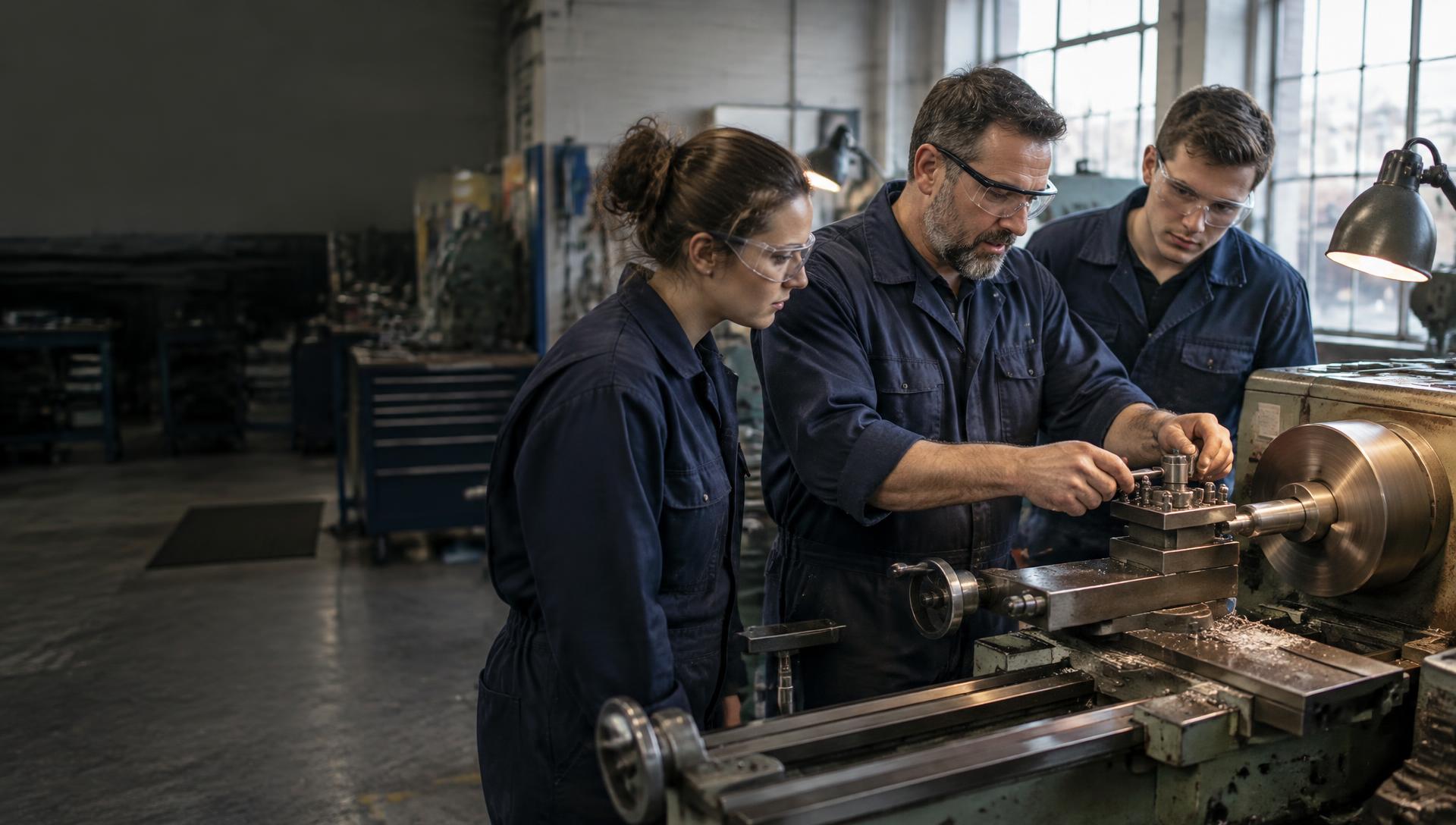
What machining and cnc covers in further education
Manual turning and milling, CNC turning and milling, multi-axis machining, G-code and CAM programming, setting and proving, toolmaking, and inspection with micrometers, height gauges and CMMs.
Roles you could be considered for
- Machining instructor
- CNC lecturer
- Engineering workshop technician
- Machining apprenticeship assessor
What you might teach
- Safe machine operation and workholding
- Speeds, feeds and tooling selection
- Reading drawings and geometric tolerancing
- Manual and conversational CNC programming
- CAM-to-machine workflow
- Measurement and first-off inspection
Skills from industry that transfer into teaching
- Setting and proving programs on Fanuc, Heidenhain, Siemens or Haas controls
- Troubleshooting scrap, chatter and dimensional drift
- Training new operators on setting procedures
Routes into FE teaching and qualifications
Colleges typically look for a recognised machining or engineering qualification and recent hands-on experience. CNC programming experience is useful but practical manual skill is often just as important for teaching lower levels.
How requirements differ across the UK
- England: there is no single legal teaching qualification requirement for FE, but many colleges expect staff to hold or work towards one.
- Wales: FE teachers must register with the Education Workforce Council.
- Scotland: the TQFE is the established qualification for college lecturers. Registration arrangements are changing, so check current guidance.
- Northern Ireland: colleges commonly expect lecturers to gain a recognised teaching qualification within a set period.
See our guides for England, Scotland, Wales and Northern Ireland, and teaching qualifications and teaching without a teaching qualification for more detail.
Funding information
Support for teacher training, such as bursaries or employer-funded qualifications, changes over time and differs by nation. We only publish funding details that we have checked against official sources. See our funding information hub.
Common questions
I have only worked on one type of controller. Is that a problem?
Not necessarily. College machines vary, and principles transfer. Be clear about what you have used so colleges can judge fit.
Would I teach manual machining as well as CNC?
Often yes, especially on Level 2 and early Level 3 programmes where manual skills are taught first.