
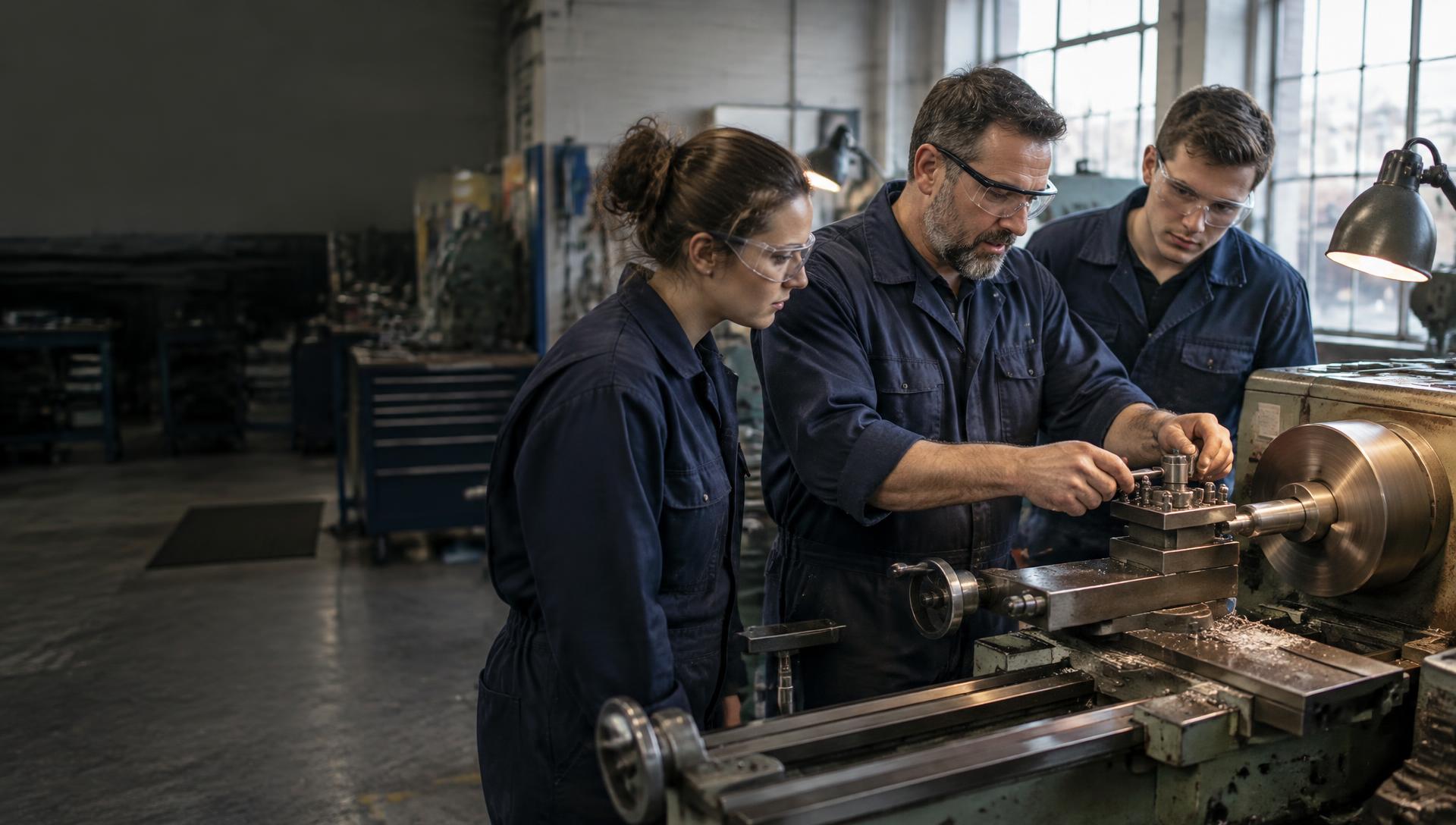
What mechanical engineering covers in further education
Mechanical principles, materials, fitting and assembly, mechanical maintenance, hydraulics and pneumatics, and engineering design.
Roles you could be considered for
- Mechanical engineering lecturer
- Fitting instructor
- Engineering assessor
What you might teach
- Mechanical science and statics
- Materials and their properties
- Fitting, assembly and alignment
- Hydraulic and pneumatic systems
- Design and drawing
Skills from industry that transfer into teaching
- Explaining how mechanisms work
- Planning assembly and maintenance tasks
- Root-cause analysis
Routes into FE teaching and qualifications
Higher-level theory teaching may call for an HNC, HND or degree. Practical roles may focus more on time-served experience. Requirements vary by college.
How requirements differ across the UK
- England: there is no single legal teaching qualification requirement for FE, but many colleges expect staff to hold or work towards one.
- Wales: FE teachers must register with the Education Workforce Council.
- Scotland: the TQFE is the established qualification for college lecturers. Registration arrangements are changing, so check current guidance.
- Northern Ireland: colleges commonly expect lecturers to gain a recognised teaching qualification within a set period.
See our guides for England, Scotland, Wales and Northern Ireland, and teaching qualifications and teaching without a teaching qualification for more detail.
Funding information
Support for teacher training, such as bursaries or employer-funded qualifications, changes over time and differs by nation. We only publish funding details that we have checked against official sources. See our funding information hub.
Common questions
Will I need to teach maths?
Engineering programmes include applied maths. Comfort with the maths used in your work is helpful.