
For tradespeople
Coming Off the Tools? Teach Construction in FE | Trade2Teach
Thinking of coming off the tools? See what teaching construction in Further Education offers: pay, pension, holidays and how to start without a degree.
Published 16 November 2026 · 5 min read
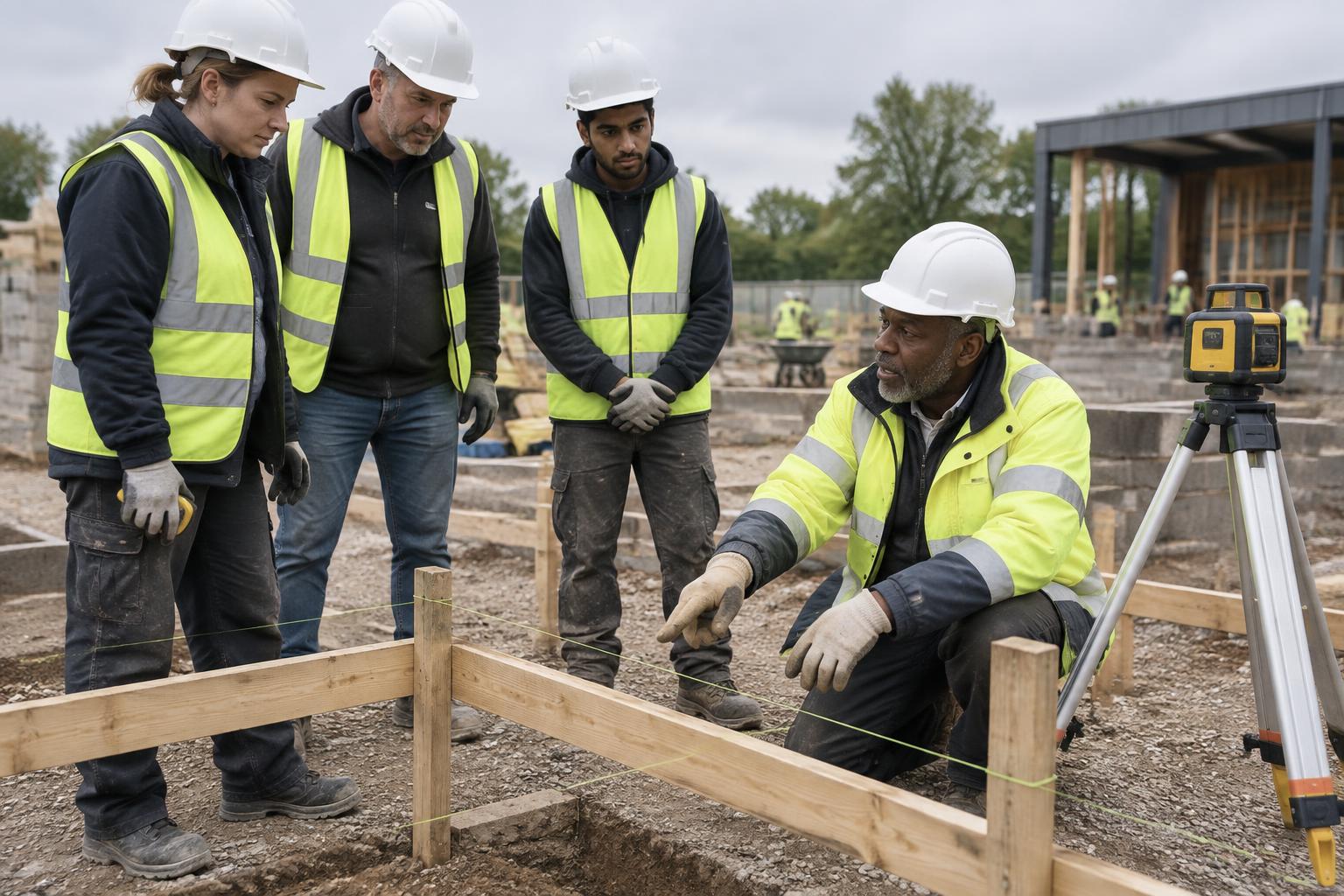
If you've spent thirty years on site, you already know two things. Your knees, back and shoulders have been keeping score. And the youngsters coming into the trade aren't arriving in anything like the numbers the industry needs.
Teaching construction in Further Education deals with both problems at once. The job is at your local FE college, and right now colleges can't fill it.
At the end of the 2024/25 academic year, 7.2 in every 100 construction teaching posts in England's FE sector were empty. That is about double the rate across all subjects. At the same time, 56% of colleges had waiting lists for construction courses.
Young people want to learn your trade. There aren't enough people like you to teach them. That gap is why Trade2Teach exists, and it's why we think becoming a construction lecturer deserves a serious look from anyone wondering how many more winters they want to spend on the tools.
Coming off the tools: a career your body can keep up with
Construction is hard on the people who do it. The Health and Safety Executive estimates that about 79,000 construction workers are living with work-related ill health. Around 41,000 of those cases, just over half, are musculoskeletal: backs, knees, shoulders, hands. The rate is well above the average for all industries.
It shows in people's plans too. Research by BSI found that only 15% of UK construction workers intend to keep working past retirement age, against 29% across all sectors. Plenty of skilled people leave not because they've stopped caring about the work, but because the work has worn them out.
Teaching is still practical. You're in a workshop, demonstrating, correcting, showing someone how to do it properly. But you're not carrying blocks or kneeling on a screed for eight hours in January.
And you won't be the old one in the staff room. The typical FE teacher is 47, and research for the Gatsby Foundation found that 61% of construction teachers in FE colleges were over 50. In FE, 50 isn't old. It's normal.
Construction lecturer salary and benefits: the honest picture
We're not going to tell you teaching pays more than a good year on site. For some of you it won't.
The median full-time salary for teaching staff in general FE colleges in England is £37,600. Construction lecturer jobs advertised this year mostly sit between about £29,000 and £45,000, with electrical roles at the top end. Colleges often add £2,000 to £3,000 on top for shortage trades.
If you're an employed bricklayer or carpenter, that is close to what you earn now. One study found construction teachers earned only about 3% less than people in comparable construction jobs. If you're a busy self-employed electrician or a site manager on a strong day rate, the drop in cash can be real, and you should go in with your eyes open.
What changes the sum is everything that comes with an FE lecturer's salary:
- A guaranteed pension. College lecturers join the Teachers' Pension Scheme. It pays a pension based on your earnings, protected against inflation, with a large employer contribution on top of your own.
- Paid holiday. Around 35 days or more a year, plus bank holidays, and often extra days when the college closes.
- Sick pay. If your back goes, you still get paid.
- Regular hours. A contracted week of about 37 hours, with no lost days to weather and no chasing invoices.
- A retention payment. In England, construction teachers in their first five years can currently claim up to £6,000 a year after tax through the government's Targeted Retention Incentive.
In Wales, lecturer pay follows a national scale kept in line with school teachers' pay. The English retention payment doesn't apply there.
If you're self-employed, add up what your holidays, sick days, pension and quiet months really cost you. The gap usually looks smaller than the headline figures suggest.
Why colleges need construction lecturers now
Everything you know took decades to learn. Most of it isn't written down anywhere. When you retire, it goes with you, unless you hand it to someone first.
The industry needs that knowledge badly. CITB says construction needs 41,200 extra workers every year until 2030. The government wants 1.5 million homes built and has put £625 million into construction skills, including ten Technical Excellence Colleges.
The learners are there. This year Bradford College had 2,439 applications for 448 places on its construction courses for 16 to 18 year olds. Nearly a third of colleges have had to limit or suspend construction apprenticeship places.
Money and buildings don't train a bricklayer. A bricklayer does. Every one of those places needs someone at the front of the workshop who has done the job for real, and a seventeen-year-old can tell the difference straight away.
How to become a construction lecturer: your questions answered
Do I need a degree to teach construction in a college?
No. For construction, colleges want a Level 3 qualification in your trade and solid industry experience. You'll also need English and maths at Level 2, which is GCSE grade 4 or C.
Do I need a teaching qualification before I start?
No. You train on the job while you're being paid, and the college usually funds it. In England a government programme called Taking Teaching Further pays colleges to train industry recruits and give them a lighter timetable and a mentor while they find their feet. In Wales you register with the Education Workforce Council and work towards your teaching qualification over your first few years.
Can I teach part-time and keep working in my trade?
Yes. Many colleges offer part-time and hourly-paid teaching, so you can do a day or two a week and keep your trade going while you find out whether it suits you.
Am I too old to become an FE lecturer?
No. The typical FE teacher is 47 and most construction teachers are over 50. Colleges want recent, deep industry experience, and that comes with age.
What is the hardest part of moving from site to classroom?
There is paperwork, and a room of sixteen-year-olds takes some managing. Both are learnable, and both are covered in your training. Anyone who has run a site or brought on an apprentice already has more of the skills than they think.
Register with Trade2Teach
Trade2Teach does one thing: we connect experienced industry professionals with teaching roles in Further Education colleges across England and Wales.
If any of this has you thinking, register with Trade2Teach. Tell us your trade, where you're based and whether you want full-time or part-time work. We'll match you with colleges that need exactly what you know.
You spent a career learning your trade. Spend the next part of it making sure it outlasts you.
Read more: Become a trade teacher
Your next step